

1821–1848
Marcus Goldman’s story begins in the Bavarian village of Trappstadt, where he was born on 9 December 1821, the eldest of five children to Wolf and Ella Goldmann. Wolf farmed and traded cattle, he was especially proud of his bright, mathematically minded son. At 16 Marcus was encouraged by his schoolmaster to attend advanced classes at the Würzburg synagogue. There Marcus met Joseph Sachs, a friendship that would eventually intertwine two families for generations.
1848–1869
By the late 1840s famine, political unrest, and the threat of conscription convinced Wolf that Germany held little future for young Jewish men. In 1848 he gave Marcus and his brother Simon 150 gulden and his blessing to seek new lives in the United States. Arriving in Philadelphia after a six-week crossing, he happened upon Joseph Sachs and his bride Sophia, who helped him find lodgings in Frau Müller’s boarding house. With no capital or trade, Marcus took to the streets with a horse-drawn wagon, selling textiles and spices along High and Broad Streets. Fourteen-hour workdays brought command of the customs, language and a reputation for courtesy, especially among Black customers whose discrimination reminded him of Jewish life in Europe.
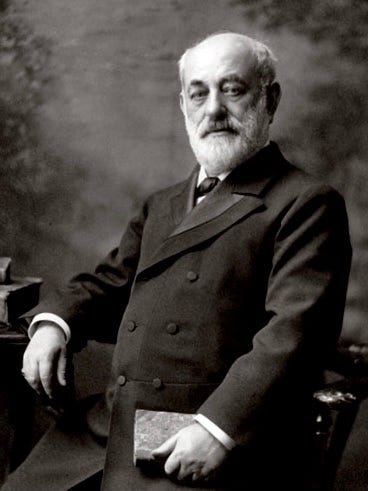
Marcus Goldman
1869–1882
At a Hebrew social event, Marcus met Bertha Kiesel, a Bremen émigré and talented seamstress. They married six months later. A five-dollar bank loan financed Bertha’s new sewing machine and a rented High-Street storefront, launching Marcus’s first venture. The family expanded; Rebecca, Rosa, Julius, Louisa (twin survivor) and Henry; and so did the business. By the early 1860s, Marcus had opened a successful men’s haberdashery and brought his sister Regina from Germany to assist in an arrangement that lasted until her marriage two years later. Yet post-Civil-War Philadelphia lagged the nation’s commercial momentum; Bertha pressed for New York, the era’s magnet for money and immigrants. In 1869 Marcus sold his store and moved the household east.
New York’s “Swamp” district teemed with tanners, jewellers and traders who needed short-term working cash. Inspired by German-Jewish banker Joseph Seligman, Marcus rented a basement office on Pine Street, hung a simple sign; “M. Goldman, Banker & Broker”; and began discounting merchants’ promissory notes (“commercial paper”). He bought IOUs at a morning discount and resold them to uptown banks by afternoon, pocketing the spread; often stored literally in the band of his tall black top hat. Despite being a newcomer, his business saw quick success.
1882–1904
Approaching sixty, Marcus sought continuity. In 1882 he invited Rebecca’s husband, Samuel Sachs, to buy into the enterprise; the firm became Goldman & Sachs. Marcus’s younger son Henry; brilliant, bookish and severely myopic; watched from the sidelines. Henry had excelled at Joseph Sachs’s Collegiate Institute, entered Harvard at fifteen, but withdrew within a year when his eyesight faltered. After a period of clerking and then travelling the country as a textile salesman, he returned to New York hoping to join his father. The invitation never came. Only in 1885 were Henry and his brother-in-law Ludwig Dreyfuss admitted as junior partners, and the partnership deed confined ownership to the inter-married Goldman, Sachs and Dreyfuss families, compelling every partner to keep most of their wealth reinvested in the firm.
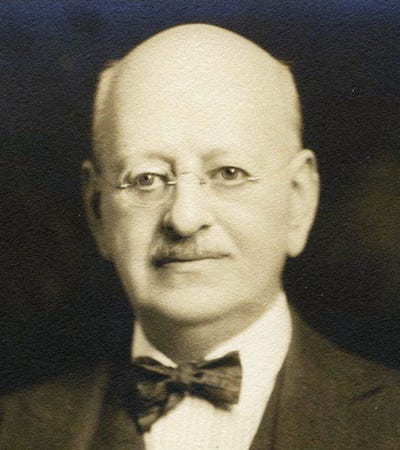
Henry Goldman
Henry’s delayed entry did not blunt his ambition. Elevated to full partner in 1898, he pushed Goldman & Sachs beyond discounting paper into bond trading and, crucially, the equity financing of America’s surging consumer industries. Railroads were his first arena, but he soon saw an opportunity in retail and manufacturing companies that lacked tangible assets yet generated robust earnings. Over lunch at Delmonico’s, he and his close friend Philip Lehman devised a syndicate model: Goldman would originate the issues, Lehman Brothers would place them, and they would split the profits. Because asset-based valuation could not capture these firms’ potential, Henry priced them on earnings and thereby formalised what became the price-to-earnings ratio; still central to equity analysis.
Deals followed rapidly: underwriting for B.F. Goodrich, financing for Studebaker’s dealer network, and the formation of CIT to extend credit to car buyers. Between 1896 and 1904 partners’ capital rose to $4.5 million, transforming a note brokerage into a national investment bank. Sam Sachs, methodical and Euro-minded, concentrated on foreign exchange relationships, notably forging a deep alliance with London merchant bank Kleinwort & Sons in 1897. The strategic contrast between Sam’s caution and Henry’s innovation ignited regular board-room fireworks, yet both streams of business flourished.
Marcus Goldman, meanwhile, fulfilled an ambition he had nurtured since his days on Pine Street: in 1896 he purchased a seat on the New York Stock Exchange for $15 000, moved the firm to 43 Exchange Place, and celebrated his fiftieth wedding anniversary with Bertha. He died on 20 July 1904, leaving a will that pleaded for harmony among his children. The plea was soon overtaken by events.
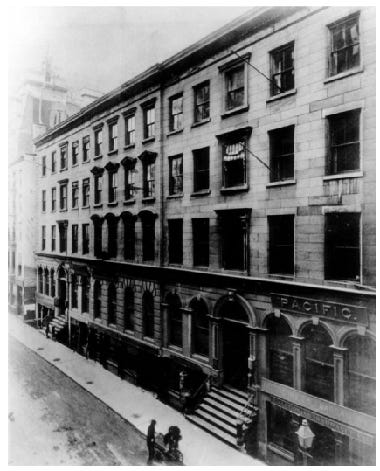
The original Goldman Sachs building at 43 Exchange Place
1904–1917
Henry’s influence extended beyond Goldman Sachs. In 1912 he sent President-elect Woodrow Wilson an eight-page memorandum warning that the absence of a central bank exposed the nation to repeated credit panics. His analysis reinforced arguments for the Federal Reserve Act of 1913, which Wilson pushed through Congress.
But Europe’s slide into war ruptured the fragile peace inside the partnership. Sam Sachs, staunchly pro-Allied, bristled at Henry’s public defence of Germany. British partners recoiled; the Bank of England barred Kleinworts from joint issues, and London newspapers pilloried Goldman Sachs. Because the firm’s bylaws required unanimous consent for investments, stalemate threatened its future. On 31 December 1917, Henry resigned, withdrawing his capital and severing all ties; he and Sam never spoke again.
1917–1937
Far from retiring quietly, Henry joined brokerage Arthur Lipper as a special partner and devoted himself to art, assembling one of the finest small collections of Renaissance and Flemish masters in America, beginning with Rembrandt’s St Bartholomew. He delighted in company from figures such as Albert Einstein to violinist Yehudi Menuhin. He also mentored a one-time office porter, Sidney Weinberg, counselling him to return to Goldman Sachs and seize its opportunities. Weinberg rose to senior partner in 1932 and steered the firm through the Great Depression, perpetuating Henry’s entrepreneurial ethos long after his departure. He was a private man with ambitious flair, never believing that he achieved the summit of his journey through his life.
He passed away in 1937; they described him as “one of the outstanding figures of the modern industrial and financial world” who had developed “a modern method of industrial financing for commerce and industry”. Although no Goldman has worked at GS since 1917 the impact and legacy of the Goldmans will never be forgotten.